





















New
Why buy from us?
Because we are the best at Service Delivery
Ask a Question About This Product
Architectural Overview & High-Efficiency Switching Topology
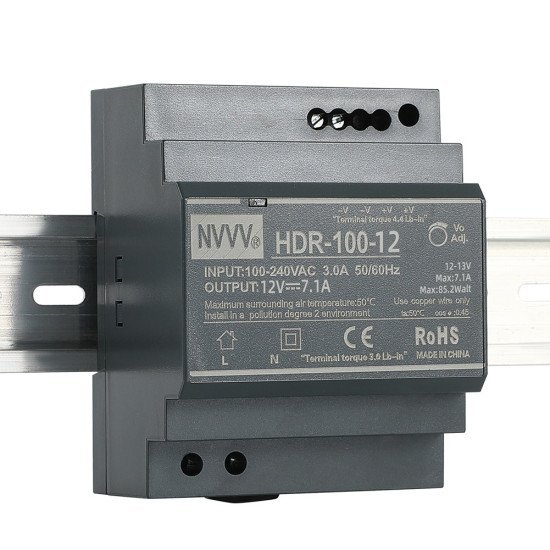
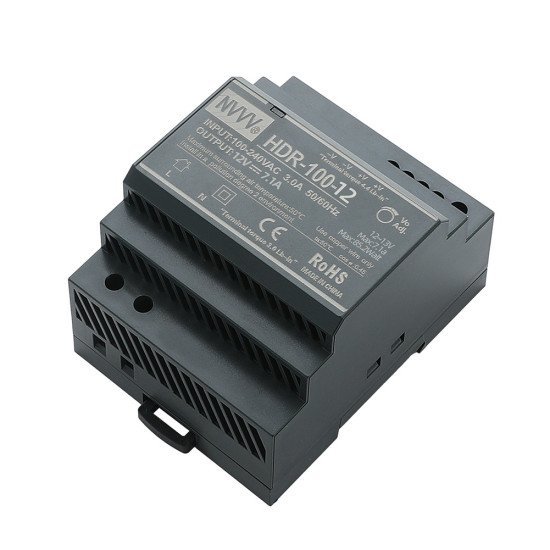
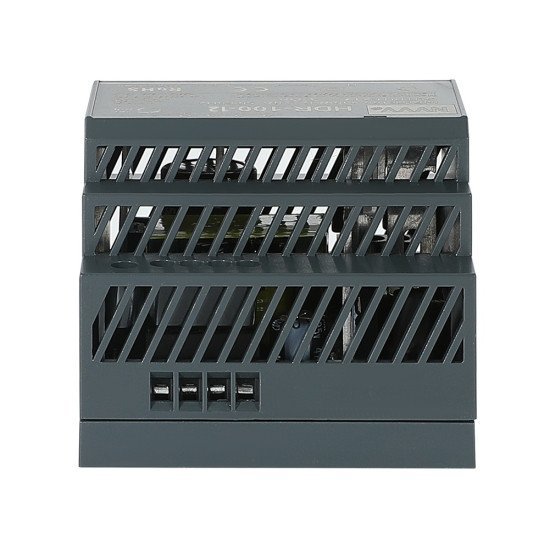
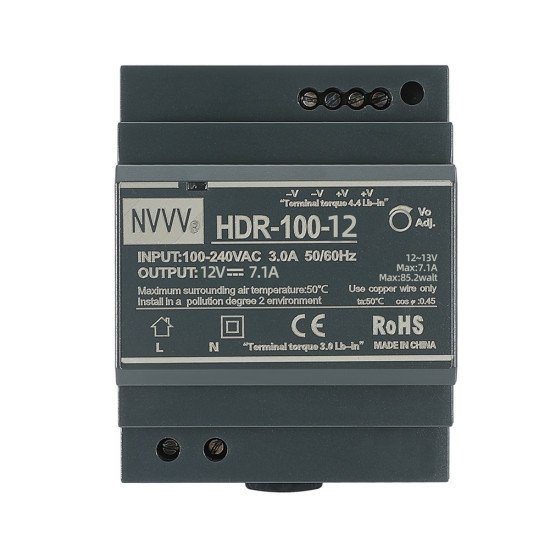
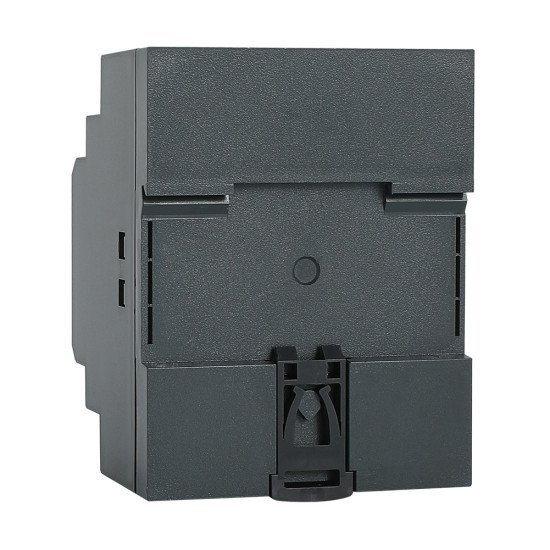
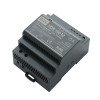
Engineered under Bantu Digital Nest's mission-critical industrial standards, the HDR-100 Series 100W DIN Rail Switched-Mode Power Supply represents an advanced step-down conversion platform optimized for high-density control panels and distributed operational technology. Leveraging a high-frequency quasi-resonant topology, the unit accepts an ultra-wide universal single-phase input from 85V to 264V AC (or 120V to 370V DC) across 47Hz to 63Hz, maintaining over 90% peak conversion efficiency with sub-0.5W no-load power consumption. The secondary rectification stage delivers a precision-regulated 12V or 24V DC bus with line and load regulation within ±1.0% and peak-to-peak output ripple suppressed below 100mVp-p. Formatted in a compact 4SU (70mm width) step-shaped DIN profile compliant with DIN 43880, the architecture allows direct co-location with modular circuit breakers, maximizing spatial capacity inside standard distribution enclosures.
Thermal Dynamics & Dissipation Engineering
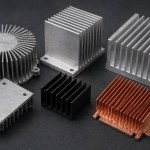
Thermodynamic performance relies on an engineered natural convection architecture developed to eliminate failure-prone mechanical forced-air components. The internal layout pairs low-impedance planar transformers with high-conductivity aluminum heat spreaders, driving thermal energy through optimized vertical and lateral convection chimneys. Operating across an ambient temperature envelope of -30°C to +70°C, the power supply provides full-load continuous output up to +50°C before engaging a linear derating curve of 2.5% per Kelvin up to the +70°C threshold. Internal silicon thermal sensors continuously monitor secondary junction margins, initiating automatic thermal shutdown with self-recovering hysteresis should thermal limits be breached.
Enclosure Sealing Integrity & Mechanical Hardening
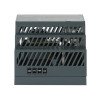
The external chassis is injection-molded from high-impact, halogen-free, flame-retardant Class II reinforced polycarbonate rated to UL 94V-0. Built to achieve an IP20 ingress protection classification per IEC/EN 60529, the chassis features shrouded terminal bays that prevent accidental direct-contact finger hazards while shielding internal circuitry against solid foreign objects greater than 12.5mm. With a Comparative Tracking Index (CTI) rating of >600V, the housing mitigates tracking arcs under damp operating atmospheres (20% to 90% non-condensing relative humidity). Mechanical stabilization is rated to withstand 2G vibrational resonance (10Hz to 500Hz along X, Y, and Z axes for 60 minutes) conforming to IEC 60068-2-6, utilizing rising-clamp screw terminal blocks engineered for 12 to 24 AWG wiring to resist mechanical loosening under cyclic stress.
Fault Containment & Electrical Galvanic Isolation
The electrical architecture is fortified with comprehensive active and passive protection vectors. Galvanic safety isolation provides 4000V AC reinforced dielectric barrier isolation between primary input and secondary output stages, meeting Class II dual-insulation standards (IEC 62368-1) without requiring a protective earth ground. Overload protection engages at 105% to 160% of nominal output through constant-current limiting, switching to intermittent hiccup recovery mode during sustained short-circuit events to protect upstream harness topology. Overvoltage clamping clamps transient spikes between 115% and 135% via a dedicated secondary Zener latch, while front-panel trimmer potentiometers provide a +10% to +15% DC adjustment margin to compensate for long-distance voltage drops.
Industrial Deployment Scenarios
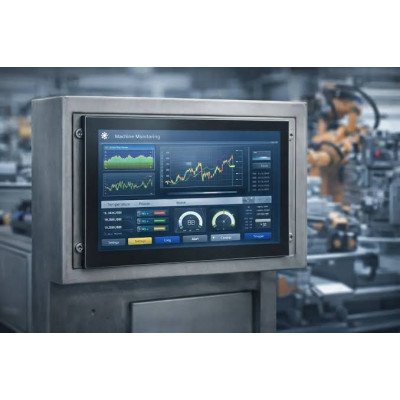
1. Distributed SCADA Remote Terminal Units (RTUs): Provides clean, surge-protected 24V DC bus telemetry power inside utility substation marshaling cabinets exposed to electrical fast transients and harmonic interference.
2. High-Density Industrial IoT Edge Gateways: Supplies continuous, ripple-free power to cellular routers, protocol translators, and micro-servers inside smart-warehouse automated material handling cells.
3. Factory Automation PLC Distribution: Serves as the primary 24V DC auxiliary source for programmable logic controllers, digital I/O slices, and solenoid manifolds within central machinery control enclosures.
4. Municipal Water Treatment Valve Actuation: Powers remote motorized ball valves, 4-20mA pressure transmitters, and chlorination dosing pumps inside unconditioned outdoor pump station kiosks.
5. Building Management System (BMS) Micro-Chillers: Delivers stabilized control voltage to HVAC digital direct controllers (DDC), variable air volume (VAV) dampers, and air-handling unit flow switches.
6. Solar Photovoltaic (PV) Combiner Box Monitoring: Operates within high-ambient solar field combiner boxes to reliably energize string-level current transducers, smart disconnects, and fiber-optic media converters.
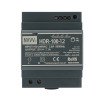
HDR-100 Ultra-Slim Industrial DIN Rail Power Supply 100W
from
KES0.00
Ex Tax: KES0.00
KES0.00
Ex Tax:KES0.00
KES0.00
Ex Tax:KES0.00
KES19,500.00
Ex Tax:KES19,500.00
KES0.00
Ex Tax:KES0.00
KES0.00
Ex Tax:KES0.00
KES0.00
Ex Tax:KES0.00