


















Your Cart
We use cookies 🍪
We use cookies and other similar technologies to improve your browsing experience and the functionality of our site. Learn more in our Privacy Policy.

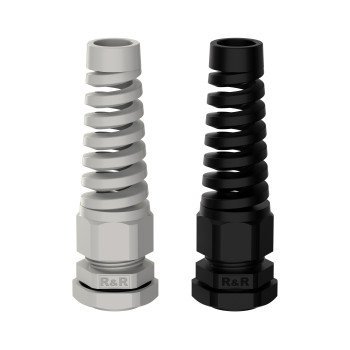
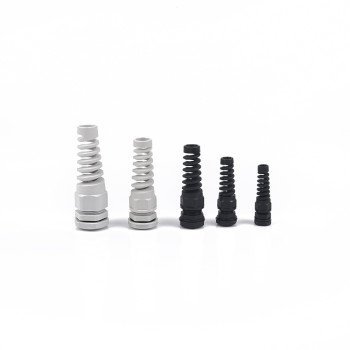
IP68 Spiral Strain Relief Nylon Cable Gland

IP68 Spiral Strain Relief Nylon Cable Gland
New
IP68 Spiral Strain Relief Nylon Cable Gland

Comprehensive Engineering Overview and Dynamic Strain Mechanics

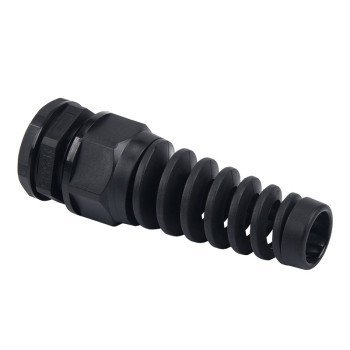
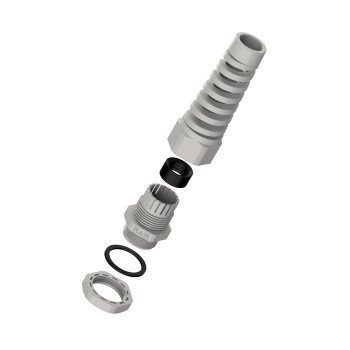
The IP68 Waterproof Spiral Strain Relief Nylon Cable Gland represents an advanced mechanical barrier and wiring protection system designed to preserve electrical integrity across high-vibration, mobile, and harsh environmental operating envelopes. Conventional cable pass-through connectors concentrate bending fatigue directly at the bulkhead termination junction, creating an acute pivot point where mechanical shear, cyclic bending stress, and dynamic flexing lead to localized conductor severing, insulation degradation, and shield fracture. This industrial-grade spiral cable gland counteracts these catastrophic failure modes through an elongated, progressive-deflection spiral neck. The spiral geometry gradually distributes lateral and transverse bending forces across an extended mechanical radius, significantly elevating the minimum allowable dynamic bend radius and preventing core fatigue in flexible cables.

Fabricated to meet rigorous continuous-immersion standards, this assembly achieves a static and dynamic hermetic seal conforming to IP68 standards under continuous water submersion down to 5 bar of hydrostatic pressure (approximately 50 meters of depth), as well as IP69K high-pressure, high-temperature washdown protocols. Whether deployed in automated factory floors, outdoor telemetry, maritime electronics, or dynamic kinetic staging, the gland isolates sensitive internal electronic chassis from dust, fine particulates, moisture ingress, chemical mists, and mechanical axial pull-out forces.

Material Science and Chemical Resilience: PA66 and NBR Seals

Precision-molded from unreinforced Polyamide 66 (PA66) exhibiting a UL 94V-2 flammability rating (with optional UL 94V-0 formulations), the body, spiral tail, locknut, and compression claw feature balanced tensile yield strength and impact toughness. PA66 provides outstanding dielectric strength, rated up to 50 kV/mm, guaranteeing robust galvanic and electrical isolation between the passing conductors and metallic enclosure chassis. The base polymer displays exceptional mechanical dimensional stability across broad thermal cycling regimes, retaining high modulus and crack resistance even when subjected to continuous operational vibrations.

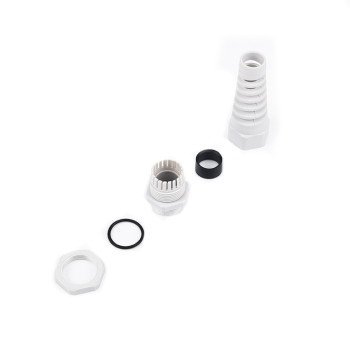
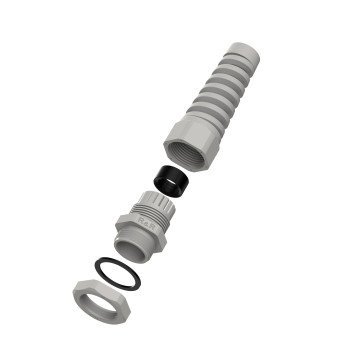
Sealing and strain distribution are executed using an internal clamping grommet and an external bulkhead O-ring manufactured from vulcanized Nitrile Butadiene Rubber (NBR) with a nominal Shore A hardness of 70. This specific elastomeric compound offers high volumetric resilience, minimal compression set over multi-year deployments, and broad chemical resistance. The NBR insert easily withstands direct exposure to petroleum distillates, hydraulic fluids, weak acids, alkaline solutions, alcohols, saline environments, and outdoor UV degradation without embrittlement, hardening, or mechanical breakdown. The mechanical synergy between the contracting PA66 segmented collet claws and the elastomeric compression sleeve yields high pull-out resistance (Class A per EN 50262), ensuring cables remain clamped without puncturing outer elastomeric jackets.

Precision Thread and Dimensional Architecture

Featuring an engineered M20 x 1.5 metric threading profile with an integrated O-ring seat groove, the gland provides universal compatibility with pre-threaded junction boxes, cast aluminum enclosures, and standard unthreaded 20.4 mm knockouts secured via the included high-torque nylon locknut. The compression nut interfaces with the multi-claw collet mechanism through a double-lead pitch, allowing uniform radial tightening around cables ranging from 6.0 mm to 12.0 mm in external diameter. The internal bore profile allows rapid cable feeding during field installation, while the high-precision threading prevents cross-threading even under blind assembly conditions in cramped industrial control cabinets.

Cable Termination, Core Preparation, and Shielding Strategy

Integrating a spiral strain relief cable gland into high-performance multi-conductor installations requires systematic preparation of cable conductors and shielding layers. To maintain mechanical and signal integrity, stripping jackets must be terminated 5 mm to 10 mm past the internal seal boundary within the clean interior enclosure space. When routing shielded industrial Ethernet, RS-485, or analog instrumentation lines, the spiral gland effectively isolates the jacket while allowing the internal drain wire or copper braid to pass cleanly to internal grounding terminal blocks or PCB ground chassis pads without crimping or pinching.

For multi-core control cables (e.g., 3-wire, 4-wire, or 8-wire assemblies), uniform cylindrical expansion is necessary. The inner NBR seal ring requires an evenly contoured external cable sheath to achieve true IP68 hermetic contact. Installers must ensure jacket roundness across the clamping zone. If individual conductor leads (such as Line, Neutral, Protective Earth, or signal buses) are split upstream from the gland, heat-shrink boots or jacket-transition sleeves must be applied before entering the compression collet to avoid longitudinal leak paths along individual conductor valleys.

Application Use-Case

1: Industrial Articulated Robotics and Cobot End-Effectors

Modern 6-axis industrial robots and collaborative robot (cobot) platforms execute millions of high-acceleration angular sweeps and rotational articulations during operational lifecycles. Traditional rigid cable glands installed on wrist joints or end-of-arm tooling (EOAT) cause dynamic power, motor feedback, and pneumatic lines to fatigue rapidly due to continuous cyclical whipping. The spiral strain relief cable gland acts as a mechanical compliance element, absorbing rotational and whipping forces. By softening the bending moment at the interface of servo controllers, gripper sensors, and vision cameras, it eliminates intermittent copper core fractures and signal corruption inside drag-chain and arm harnesses.

Marine-Grade Navigational Electronics and Buoy Instrumentation

Marine buoys, autonomous surface vehicles (ASVs), and vessel mast installations operate in severe environmental conditions featuring direct saltwater immersion, heavy sea spray, and violent wave impacts. Salt deposits accelerate galvanic corrosion on metallic glands, while constant wave shock breaks rigid wiring interfaces. The non-metallic PA66 construction of this spiral gland eliminates saltwater corrosion, while its IP68 seal resists driving rain and submersion. The internal NBR grommet ensures no moisture tracks down sensor leads into GPS, radar, sonar, or depth transceiver housings.

Automated Guided Vehicles (AGVs) and Mobile Warehouse Robotics

Warehouse AGVs and autonomous mobile robots (AMRs) run over concrete expansions, speed bumps, and floor obstacles, generating continuous structural vibration. Sensor lines connecting to LiDAR scanners, safety bumpers, and floor-mapping cameras pass through the chassis bulkhead. Utilizing this spiral strain relief gland isolates delicate sensor wiring from repetitive low-amplitude shock and high-frequency chassis vibration, ensuring zero signal degradation or loss of communication on CAN bus and Ethernet links.

Solar Photovoltaic Inverters and Outdoor Microinverters

Photovoltaic installations encounter relentless solar ultraviolet exposure, thermal swings from sub-zero winter nights to +85°C enclosure temperatures, and wind-induced cable whipping. This UV-stabilized cable gland securely fastens DC string inputs and AC grid-tie outputs entering inverter combiner boxes. The elastomeric NBR compression ring prevents thermal-cycling looseness, maintaining a gas-tight seal that repels humidity, condensation, and nesting insects, thereby preventing ground-fault interrupters from triggering.

Outdoor Stage, Concert, and Architectural Lighting

Dynamic moving-head stage luminaires, architectural facades, and outdoor wash lights are subject to frequent repositioning, rig teardowns, and heavy mechanical handling. DMX512 data cables, powerCON lines, and True1 feeds routed through moving yokes undergo high-cycle mechanical abuse. The integrated spiral neck prevents sharp 90-degree kinking during rapid automated tilt and pan movements, ensuring zero flickering or loss of lighting control packets during live broadcasts and productions.

Agricultural Irrigation Controls and Automated Field Telemetry

Modern precision agriculture depends on distributed field sensor hubs, soil moisture probe telemetry, and center-pivot irrigation controllers. These nodes are continually subjected to pressurized chemical fertilizer sprayers, heavy pesticides, UV radiation, and high humidity. The chemical resistance profile of the PA66 nylon body and NBR seal resists agrochemical degradation, while the dynamic strain relief withstands accidental impacts from livestock, wildlife, or maintenance equipment, protecting sensor connections.

Electric Vehicle EVSE Charging Stations and DC Fast-Chargers

Level 2 and Level 3 DC fast-charging pedestals house sensitive communications microcontrollers, RFID modules, and cooling pump sensors. Cables entering the pedestal base are subject to vibration from high-current cooling fans and external physical stress from pedestrians or vehicles. The spiral cable gland provides strain relief and moisture protection around internal sub-assembly wiring, ensuring non-stop uptime and compliance with municipal outdoor electrical enclosure codes.

Rail Transport and Heavy Machinery Engine Compartments

Heavy earthmoving machinery, excavators, and rail locomotive control systems present an environment saturated with diesel fumes, lubricating oils, and intense mechanical vibration. Auxiliary control sensors, alternator leads, and hydraulic valve actuating wires utilize this spiral gland to penetrate chassis bulkheads. The oil-resistant NBR compound resists degradation from engine-bay oils, while the flexible nylon spiral neck absorbs engine-induced vibration harmonics, ensuring continuous wiring stability.

Installation Best Practices and Torque Specifications

To ensure total IP68 sealing and mechanical load distribution, the mounting surface surrounding the enclosure clearance hole must be clean, smooth, and free of burrs. Insert the threaded body with the NBR O-ring seated against the external chassis surface. Fasten the rear locknut to a recommended torque of 3.5 Nm to 4.5 Nm. Strip the outer cable jacket to the required depth, insert the cable through the spiral cap and internal collet claws, and tighten the spiral dome compression nut to 2.5 Nm to 3.5 Nm. Avoid over-torquing, which may distort the internal rubber sleeve and compromise circular seal integrity around non-rigid jackets.

IP68 Spiral Strain Relief Nylon Cable Gland
KES50.00
Ex Tax: KES50.00
  • Stock: In Stock
  • Model: IP68 Spiral Strain Relief Nylo
  • Weight: 22.00g
  • Dimensions: 65.00mm x 24.00mm x 24.00mm
  • SKU: 90

Available Options